Community-based psychoeducation for disaster preparedness
Improving resilience in rural West Sumatra
DOI:
https://doi.org/10.24252/sociality.v5i1.59938Keywords:
disaster preparedness, psychoeducation, public health, rural communitiesAbstract
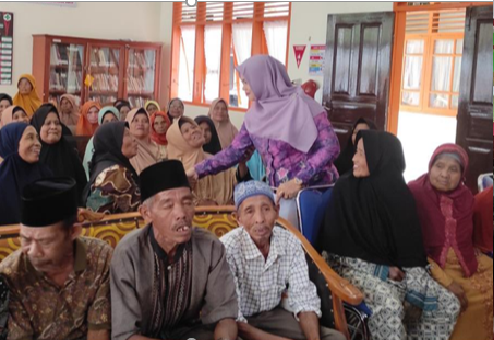
Previous disaster preparedness studies in rural, disaster-prone areas have largely prioritized structural mitigation and early warning systems, leaving a critical gap in community-based health interventions that address psychosocial readiness. This study introduces a culturally contextualized psychoeducational intervention as a public health strategy to strengthen disaster preparedness in Kecamatan X Koto, Tanah Datar Regency, West Sumatra, Indonesia. The objective was to enhance community preparedness through an intervention emphasizing psychosocial health, risk perception, and self-efficacy as core components of disaster health interventions. A participatory intervention design was implemented over nine months (March–November 2024), involving 69 community members. The intervention comprised situational analysis, group-based psychoeducational sessions, disaster simulations, and pre- and post-test assessments. Results demonstrated a substantial improvement in overall preparedness scores, increasing from a mean of 12.54 to 37.64 after the intervention. Beyond cognitive gains, participants exhibited improved emotional regulation, heightened awareness of disaster risks, and stronger behavioral intentions to engage in adaptive response actions. These outcomes align with established psychosocial health theories, underscoring the effectiveness of community-centered learning in enhancing resilience. The intervention was particularly beneficial for participants with limited formal education, indicating its inclusivity and scalability. Integrating psychoeducational health interventions into disaster preparedness frameworks may strengthen public health resilience and support sustainable disaster risk reduction in rural and urban disaster-prone settings.
References
AchutaRao, K. M., Adhikary, B. A., & Aldrian, E. (2023). Summary for Policymakers. In Climate change 2021: The physical science basis (1st ed., pp. 3–32). Cambridge University Press. https://doi.org/10.1017/9781009157896.001
Ayuningtyas, D., Windiarti, S., Hadi, M. S., Fasrini, U. U., & Barinda, S. (2021). Disaster preparedness and mitigation in Indonesia: A narrative review. Iranian Journal of Public Health, 50(8), 1536–1546. https://doi.org/10.18502/ijph.v50i8.6799
Badan Nasional Penanggulangan Bencana. (2023, June 22). Panduan kesiapsiagaan bencana untuk keluarga. https://direktoripb.bnpb.go.id/produk/panduan-kesiapsiagaan-bencana-untuk-k-keluarga
Bilgin, A. and Özdemir, L. (2022). Interventions to Improve the Preparedness to Care for Family Caregivers of Cancer Patients. Cancer Nursing, 45(3), E689-E705. https://doi.org/10.1097/ncc.0000000000001014
Bogdan, E., Krueger, R., Wright, J., Woods, K., & Cottar, S. (2024). Disaster Awareness and Preparedness Among Older Adults in Canada Regarding Floods, Wildfires, and Earthquakes. International Journal of Disaster Risk Science, 15(2), 198-212. https://doi.org/10.1007/s13753-024-00555-9
Brandt, T., Ebel, C., Lebahn, C., & Schmidt, A. (2025). Acute physiological responses and performance determinants in Hyrox© – a new running-focused high intensity functional fitness trend. Frontiers in Physiology, 16. https://doi.org/10.3389/fphys.2025.1519240
Brebahama, A., Nisa, A. U., & Kinanthi, M. R. (2019). Peran family sense of coherence terhadap resiliensi keluarga yang memiliki anak tunanetra ditinjau dari perspektif ibu. Jurnal Psikogenesis, 7(2), Article 2. https://doi.org/10.24854/jps.v7i2.1132
Chandra, Y., Kawamura, Y., Paudel, S., & NISHIGAWA, M. (2020). Value of mutual assistance for disaster risk reduction in Japan, Indonesia, and Nepal: A preliminary study. Health Emergency and Disaster Nursing, 7(1), 9-16. https://doi.org/10.24298/hedn.2018-0010
Cuaton, G. and Su, Y. (2020). Local-indigenous knowledge on disaster risk reduction: Insights from the Mamanwa indigenous peoples in Basey, Samar after Typhoon Haiyan in the Philippines. International Journal of Disaster Risk Reduction, 48, 101596. https://doi.org/10.1016/j.ijdrr.2020.101596
Dales, Z., Salvan, E., & Paulican, A. (2021). Community-Based Disaster Risk Management in Flood and Landslide-Prone Areas: Exploring the Lived Experiences of Residents in Bukidnon. Asia Pacific Journal of Social and Behavioral Sciences, 18, 77-92. https://doi.org/10.57200/apjsbs.v18i0.233
Published
How to Cite
Issue
Section
License
Copyright (c) 2025 Renidayati Renidayati, Verra Widhi Astuti, N Rachmadanur, Nurlelasari Harahap, Darwel Darwel

This work is licensed under a Creative Commons Attribution-NonCommercial-ShareAlike 4.0 International License.