Empowering adolescents in school settings
Basic life support and choking education
DOI:
https://doi.org/10.24252/sociality.v5i1.63240Keywords:
adolescents, basic life support, choking, school-based education, emergency preparednessAbstract
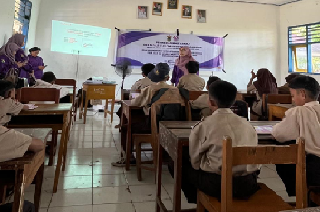
Previous studies have highlighted the importance of emergency preparedness in school settings. However, evidence on structured basic life support (BLS) and choking education among adolescents in rural and semi-rural areas remains limited, indicating a critical gap that this study addresses. This study aimed to improve the knowledge of junior high school students regarding basic life support and choking management at SMPN 4 Manggarabombang, Indonesia. A participatory educational intervention was implemented using an interactive lecture approach covering core concepts of BLS and choking management, followed by question-and-answer sessions and practical simulations to reinforce students’ understanding. The program involved 30 students, consisting of 8 males (26.7%) and 22 females (73.3%), predominantly aged 12–13 years. Knowledge levels were assessed using pre-test and post-test instruments. The results demonstrated a clear improvement in students’ knowledge following the intervention, with the mean pre-test score increasing from 5.03 to 6.87 in the post-test, representing an improvement of 1.84 points or 36.5%. The educational activity was well received by both students and school authorities, indicating high acceptability and feasibility of the program. These findings indicate that school-based BLS and choking education effectively improves adolescents’ emergency response knowledge while fostering preparedness and social responsibility through collaboration between universities, schools, and communities.
References
Amila, Sembiring, E., & Sipayung, N. P. (2023). Edukasi Kesehatan dan Pertolongan Pertama Choking (Tersedak) Pada Siswa SMA Swasta Medan. KOMUNITA: Jurnal Pengabdian Dan Pemberdayaan Masyarakat, 2 (2) , 153-159. https://doi.org/10.60004/komunita.v2i2.67
Banyard, V., Edwards, K., Waterman, E., Kollar, L., Jones, L., & Mitchell, K. (2022). Exposure to a youth-led sexual violence prevention program among adolescents: The impact of engagement.. Psychology of Violence, 12(6), 403-412. https://doi.org/10.1037/vio0000413
Downloads
Published
How to Cite
Issue
Section
License
Copyright (c) 2025 Aminuddin Syam, Indra Fajarwati Ibnu, Fitria Hasanuddin, Andi Nur Anna, Ernawati Ernawati, Firawati Firawati, Mantasia Mantasia

This work is licensed under a Creative Commons Attribution-NonCommercial-ShareAlike 4.0 International License.